
ETP PERFORMANCE AUDIT | DIAGNOSE BEFORE YOU MODIFY
ETP Performance Audit to Find the Real Cause of Plant Problems
An ETP can appear operational while still wasting chemicals, energy and operator time or producing unstable outlet quality. A performance audit evaluates how the plant is actually behaving under current wastewater load so corrective actions can be based on evidence rather than trial-and-error changes.
Aurangabad / Chhatrapati Sambhajinagar • Maharashtra
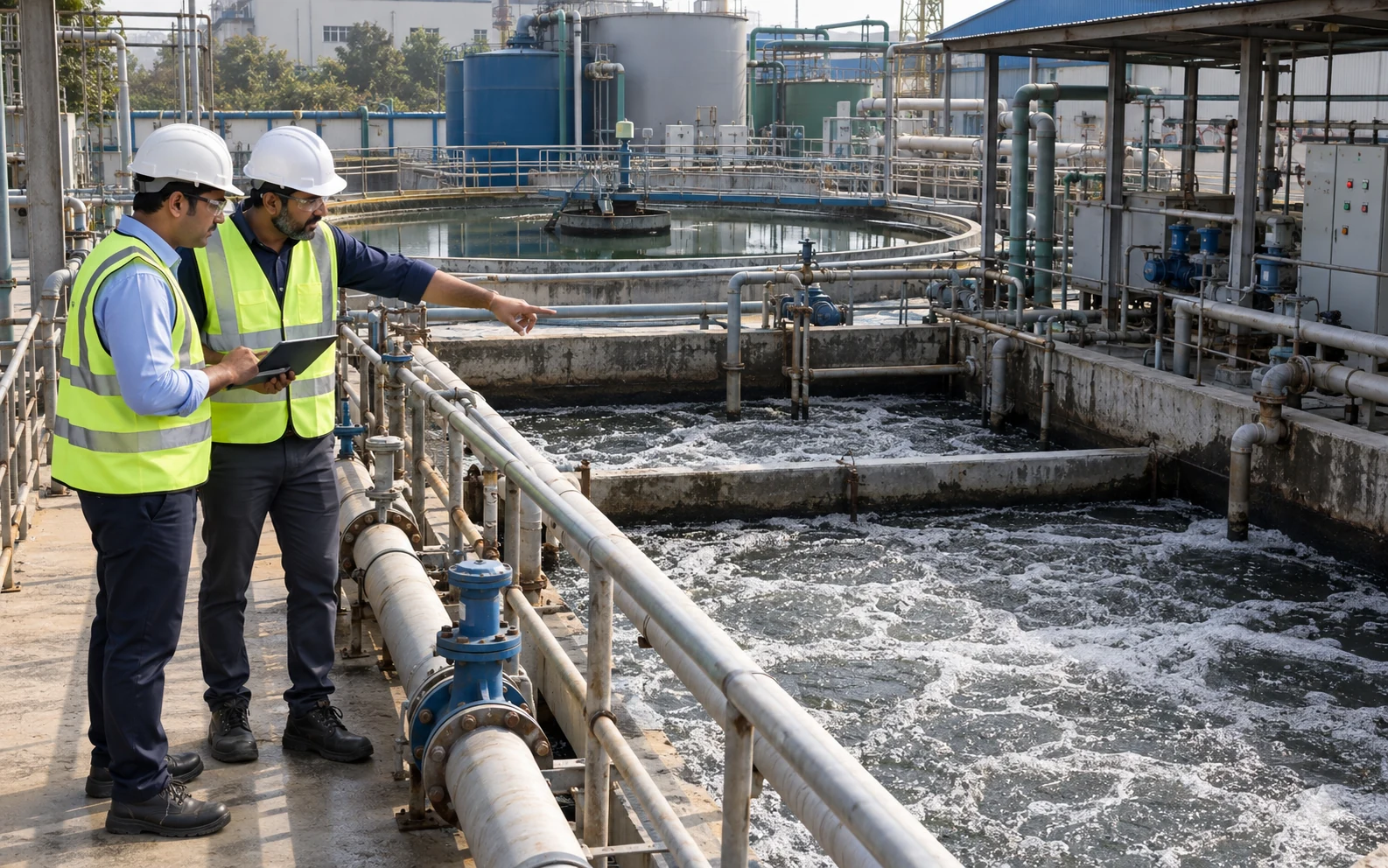
ETP PERFORMANCE
What an ETP Performance Audit Should Answer
A useful ETP audit should answer four practical questions: what is entering the plant, what each treatment stage is actually achieving, where performance is being lost, and which corrective actions will have the highest impact. The audit should connect laboratory results, process observations, equipment condition and operating practices.
Hydropure focuses on identifying the cause of instability rather than producing a generic inspection report.
ETP PERFORMANCE
Key Areas Reviewed During the Audit
The review can cover inlet flow and load variation, pH profile, COD/BOD/TSS loading, oil and grease where relevant, equalization, chemical dosing, coagulation/flocculation, biological activity, dissolved oxygen, aeration, settling, sludge recycle and disposal, pumps, blowers, filters, instrumentation and operator logs.
The exact audit scope depends on the ETP configuration and the problem the plant is experiencing.
ETP PERFORMANCE
High COD, High BOD and Unstable Outlet Quality
Persistent high COD or BOD can have several causes: shock loading, inadequate equalization, low biological activity, poor oxygen transfer, toxic process streams, incorrect chemical dosing, solids carryover, excessive hydraulic load or insufficient treatment capacity.
A performance audit helps separate these causes so the plant team can avoid adding chemicals or equipment without understanding the bottleneck.
ETP PERFORMANCE
From Audit Findings to an Improvement Plan
Audit findings should be prioritized into immediate operating corrections, maintenance actions, instrumentation needs, process optimization and capital modifications. Some problems can be corrected through operation and maintenance; others may require an ETP revamp.
Hydropure can connect the audit to troubleshooting, revamping, continuous monitoring, Plant AMC and water-recovery requirements so the improvement path remains practical.
ETP PERFORMANCE
Who Should Request an ETP Performance Audit?
An audit is useful for Plant Heads, EHS teams, Utility Heads, Maintenance teams and business owners when the ETP is consuming more chemicals or power, repeatedly failing internal targets, struggling after production expansion or showing inconsistent performance between shifts.
It is also useful before major revamping so the scope and investment are based on actual plant conditions.
ETP FAQ
Frequently Asked Questions
Practical answers about industrial ETP performance, troubleshooting, audits and revamping.
How long does an ETP performance audit take?
The duration depends on plant size, complexity, data availability and whether sampling or extended observation is required. The audit scope should be defined around the specific performance issue.
Does an audit include laboratory testing?
It can include review of existing laboratory data and, where needed, targeted sampling or testing to understand treatment-stage performance.
What happens after the audit?
The output should identify likely causes, priority corrective actions and whether the plant needs operating correction, maintenance, monitoring, optimization or revamping.
Can an audit help reduce ETP operating cost?
Yes. Audits can reveal over-aeration, chemical overdosing, inefficient pumps or blowers, poor sludge handling and other operating losses that may be contributing to unnecessary cost.
INDUSTRIAL ETP PERFORMANCE
Improve the ETP You Already Have
Audit · Troubleshooting · Revamping · Monitoring · AMC