
ETP TROUBLESHOOTING | FIND THE CAUSE BEFORE THE FIX
ETP Troubleshooting for High COD, Poor Settling & Unstable Performance
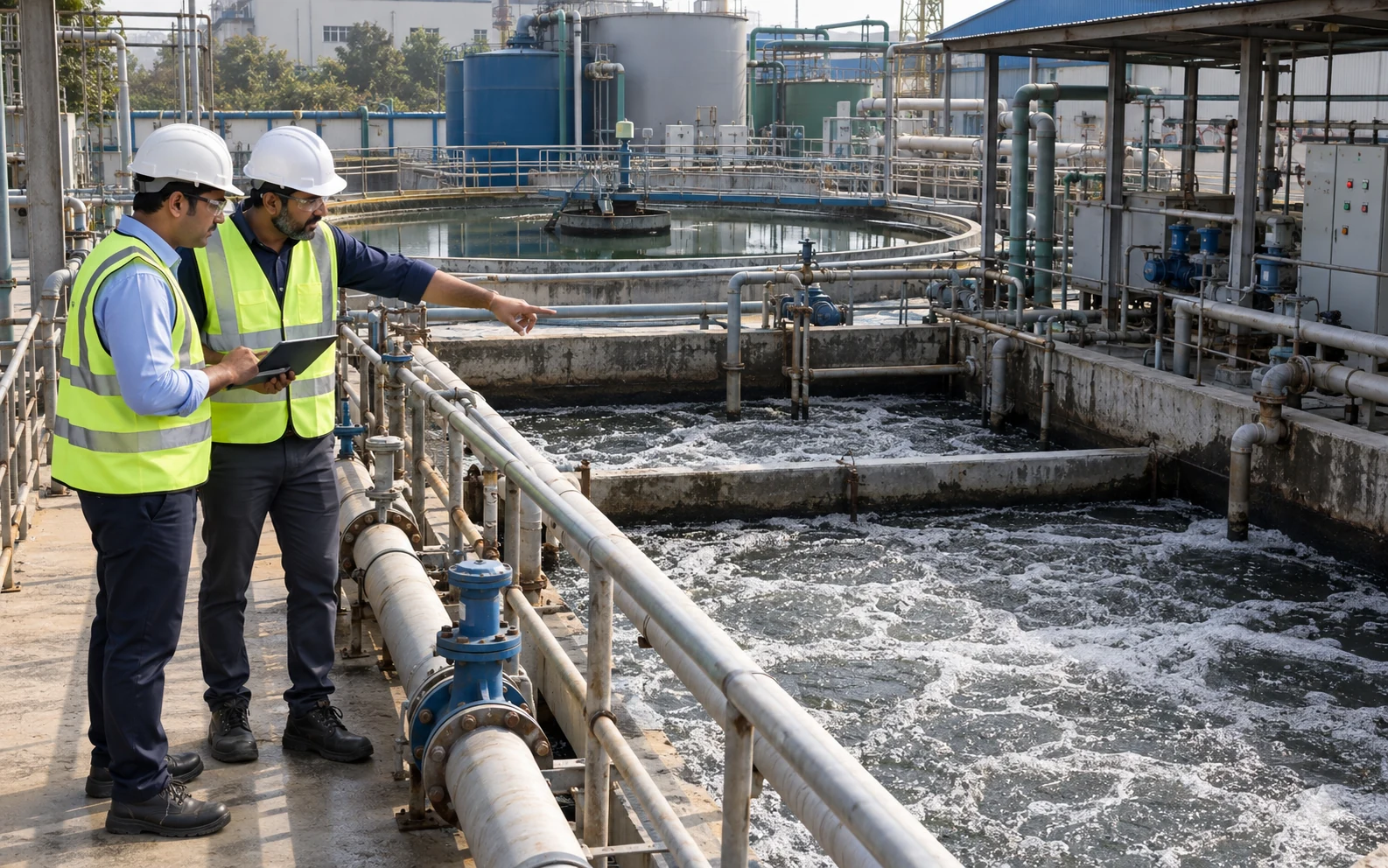
When an ETP suddenly stops meeting expected performance, the visible symptom is often not the real cause. High COD, poor settling, odour, foam, low dissolved oxygen, excessive sludge or unstable pH can originate upstream in the process or from interactions between treatment stages. Hydropure uses a structured troubleshooting approach to trace the problem through the complete treatment process.
Aurangabad / Chhatrapati Sambhajinagar • Maharashtra
ETP PERFORMANCE
Why ETP Troubleshooting Needs a Process-Wide View
Treating only the final outlet result can lead to repeated failure. Troubleshooting should start from wastewater generation and follow the flow through collection, equalization, pH adjustment, chemical treatment, biological treatment, clarification, filtration and sludge handling.
Changes in production chemistry, cleaning cycles, batch discharge, temperature, toxic contaminants or hydraulic peaks can destabilize a plant even when equipment appears normal.
ETP PERFORMANCE
High COD or BOD in the ETP Outlet
High organic load can result from increased inlet load, inadequate equalization, poor biological activity, insufficient aeration, low retention time, toxic inhibition, solids carryover or a treatment process that no longer matches the wastewater.
The right response depends on where the removal efficiency is being lost. Simply increasing chemical dose may increase sludge without solving the underlying cause.
ETP PERFORMANCE
Poor Settling, Sludge Bulking and Solids Carryover
Clarifier and sludge problems can be caused by biological imbalance, hydraulic overload, incorrect recycle, poor floc formation, insufficient settling area, filamentous growth or mechanical issues. Solids carryover can then increase final COD and TSS.
Troubleshooting should connect settling behavior with upstream aeration, loading and sludge age rather than treating the clarifier in isolation.
ETP PERFORMANCE
pH, Aeration, Odour and Equipment Problems
Unstable pH can disrupt chemical and biological treatment. Low oxygen transfer can reduce biological removal even if blowers are running. Odour can indicate anaerobic zones, septic equalization or sludge-handling issues. Pump, blower, dosing and instrumentation faults can further hide the process condition.
Hydropure reviews process symptoms together with equipment and operating data to define practical corrective actions.
ETP PERFORMANCE
When Troubleshooting Should Lead to Revamping
If the plant can be stabilized through operating correction or maintenance, major capital work may not be necessary. If the current process is undersized, outdated or structurally unable to manage present loads, troubleshooting findings should become the technical basis for revamping.
This prevents repeated short-term fixes and helps prioritize modifications that directly address the performance limitation.
ETP FAQ
Frequently Asked Questions
Practical answers about industrial ETP performance, troubleshooting, audits and revamping.
Why is ETP COD high even after treatment?
Possible causes include higher inlet load, insufficient biological treatment, poor aeration, toxic wastewater, inadequate retention time, solids carryover or treatment stages that are no longer suitable for the present wastewater.
Why does ETP sludge not settle?
Poor settling can result from biological imbalance, hydraulic overload, bulking, incorrect sludge recycle, inadequate floc formation or clarifier limitations.
Can ETP problems be solved without revamping?
Many issues can be corrected through operating changes, maintenance, dosing correction, aeration improvement or better monitoring. Revamping is appropriate when the existing configuration itself is the limitation.
What data is useful for ETP troubleshooting?
Useful data includes inlet and outlet flow, pH, COD, BOD, TSS, dissolved oxygen, chemical consumption, sludge observations, equipment status and changes in production or cleaning activities.
INDUSTRIAL ETP PERFORMANCE
Improve the ETP You Already Have
Audit · Troubleshooting · Revamping · Monitoring · AMC